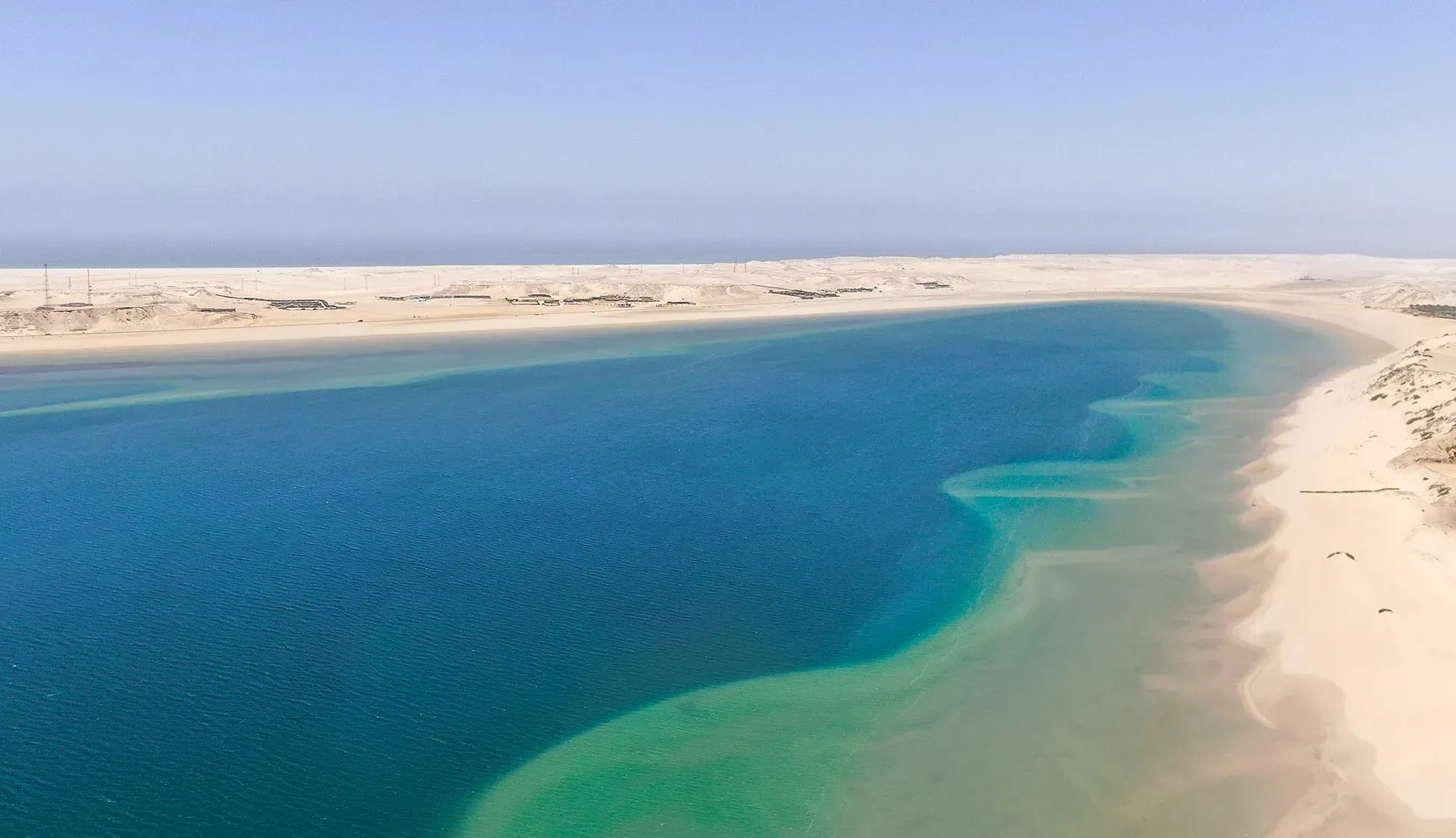
The Oyster Farm spot sits roughly 28 kilometers south of Dakhla town, in a stretch of the lagoon where the water is calm, the bottom is sandy, and the shoreline is dotted with the wooden frames and mesh baskets of Dakhla's renowned oyster cultivation industry. This is where kitesurfing and local culture intersect in a way that exists nowhere else in the region. The spot itself offers consistent flat water conditions with reliable side-shore wind, making it an excellent training ground for intermediate riders working on freestyle progression and flat-water tricks. But what sets the Oyster Farm apart from every other flat water spot in Dakhla is the experience surrounding the session. After hours of riding in warm, shallow water with a sandy bottom beneath your feet, you step off the water and into one of the most unique post-session rituals in kitesurfing: fresh Dakhla oysters, harvested meters from where you were riding, served on the shore while the sun drops toward the Atlantic.
Conditions & Best Time
The Oyster Farm benefits from the same thermal wind system that powers the entire Dakhla lagoon. Side-shore winds blow consistently between 18 and 25 knots throughout the main season from April to September. What makes this particular section of the lagoon appealing is the absence of any significant chop or current. The oyster farm structures further up the lagoon act as natural wind breaks at water level, smoothing out the surface and creating a riding area that is remarkably flat even when the wind is strong. For riders focused on flat tricks and freestyle, this glass-smooth water is ideal.
Unlike spots that require specific tidal windows, the Oyster Farm works well at any tide level. The water depth ranges from shallow at low tide to moderate at high tide, but the bottom remains sandy and clean throughout. There are no reef hazards, no rocks, and no submerged obstructions anywhere in the riding area. This makes the Oyster Farm one of the safest spots in the lagoon for riders who are pushing their limits and accepting frequent falls as part of the learning process.
Water temperature between April and September ranges from 20 to 23 degrees Celsius. The air is warm and dry, with abundant sunshine making for comfortable all-day sessions. A shorty wetsuit or a thick rashguard is sufficient for most riders, though some prefer a light 3/2mm suit on cloudier days or during early morning sessions when the wind is still building.
- Wind: Side-shore, 18–25 kts
- Water: Flat
- Bottom: Sand
- Best tide: Any tide
- Best months: April to September
- Water temperature: 20–23°C
Who Should Ride Here?
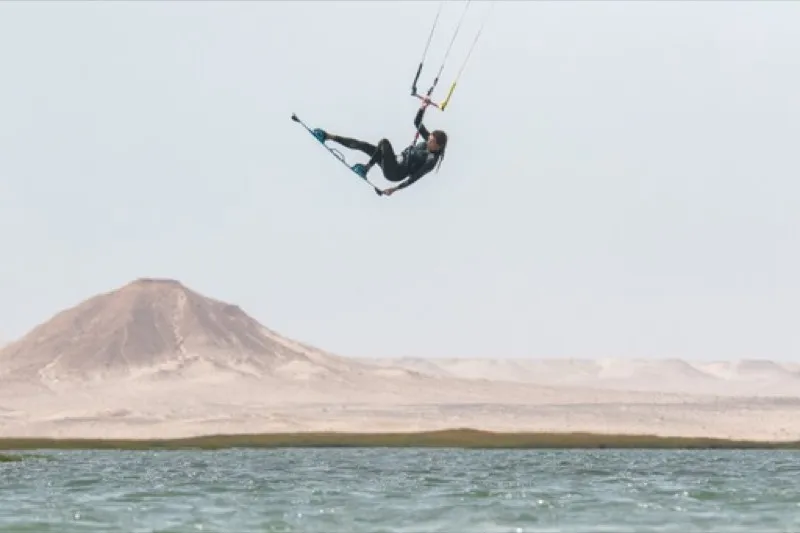
The Oyster Farm is well suited for intermediate riders who have moved past the beginner stage and are looking for a flat water environment to develop their technical skills. If you can ride upwind, perform basic transitions, and control your kite confidently, this spot gives you the conditions to start working on powered tricks, board-offs, and aerial maneuvers with a forgiving landing surface beneath you. The consistent wind and flat water remove the variables that can make trick progression frustrating at choppier or gustier locations.
The primary disciplines here are freestyle, flat tricks, and downwinder arrivals. The Oyster Farm is a popular endpoint for downwinder runs that begin further north in the lagoon, making it a natural destination for riders exploring longer distance sessions. Arriving at the Oyster Farm after a downwinder and transitioning into a freestyle session is one of the signature experiences that ProKite Coaching offers to intermediate and advancing riders.
The spot is also particularly appealing to riders who want more from their kite trip than just time on the water. The proximity of the working oyster farms adds a cultural dimension that you simply do not find at other kite spots. Many riders describe their sessions at the Oyster Farm as the highlight of their Dakhla trip, not because the conditions are the most extreme or the wind the most powerful, but because the combination of great riding and an authentic local experience creates something genuinely memorable.
How to Get There
The Oyster Farm is approximately 28 kilometers south of Dakhla town, accessible by road along the lagoon's western shore. The drive takes roughly 35 to 40 minutes on a paved road that transitions to a sandy track for the final stretch. A standard vehicle can handle the route in dry conditions, though a 4x4 provides more comfort on the unpaved section. ProKite Coaching provides transport for all coached sessions, with Amine driving students directly to the launch area.
For riders on downwinder sessions, the Oyster Farm serves as the arrival point rather than the departure. Starting from a launch spot further up the lagoon, riders kite downwind to the Oyster Farm over the course of one to two hours depending on conditions and distance. The boat follows alongside for safety and gear transport. Upon arrival, riders land on the sandy shore near the farm structures, where the afternoon portion of the day begins. There are basic facilities near the oyster farms, including shade structures and areas to rinse gear, though riders should bring their own water and provisions for the session.
Our Coaching at Oyster Farm
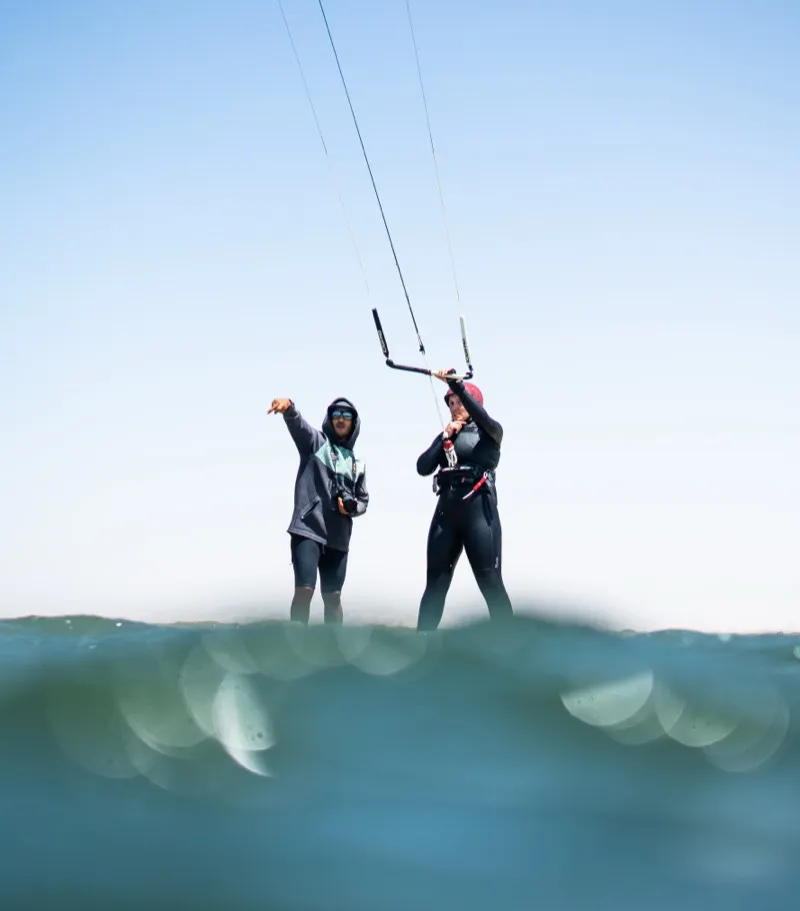
Amine combines kite sessions at the Oyster Farm with local experiences to create coaching days that go beyond technical progression. A typical Oyster Farm day begins with a morning drive or downwinder to the spot, followed by a structured freestyle session on the flat water. Amine works with riders on specific tricks and techniques tailored to their current level, using the reliable wind and smooth water to build repetition and muscle memory. The flat conditions allow for focused work on pop technique, board control during rotations, and kite timing for powered tricks.
After the morning session, students enjoy fresh Dakhla oysters at one of the small tasting areas near the farms. This is not a tourist excursion bolted onto a kite lesson. It is a genuine part of how Amine shares Dakhla with the people who come to learn from him. The oysters are harvested from the same lagoon waters that riders were just kiting across, and the connection between the sport, the environment, and the local food culture is immediate and tangible. For many students, this experience transforms a good kite trip into an unforgettable one.
Afternoon sessions often follow the oyster break, with Amine reviewing footage from the morning, adjusting technique points, and sending riders back out with specific goals for the second half of the day. The wind typically strengthens through the afternoon, which provides an opportunity to apply the morning's corrections under slightly more demanding conditions. The combination of coaching, culture, and consistent conditions makes the Oyster Farm day one of the most popular offerings in the ProKite Coaching program, and one that returning students frequently request.
Photo Gallery
Ready to ride the Oyster Farm?
Combine world-class flat water kitesurfing with authentic Dakhla culture, guided by Amine.
Book Your Session →