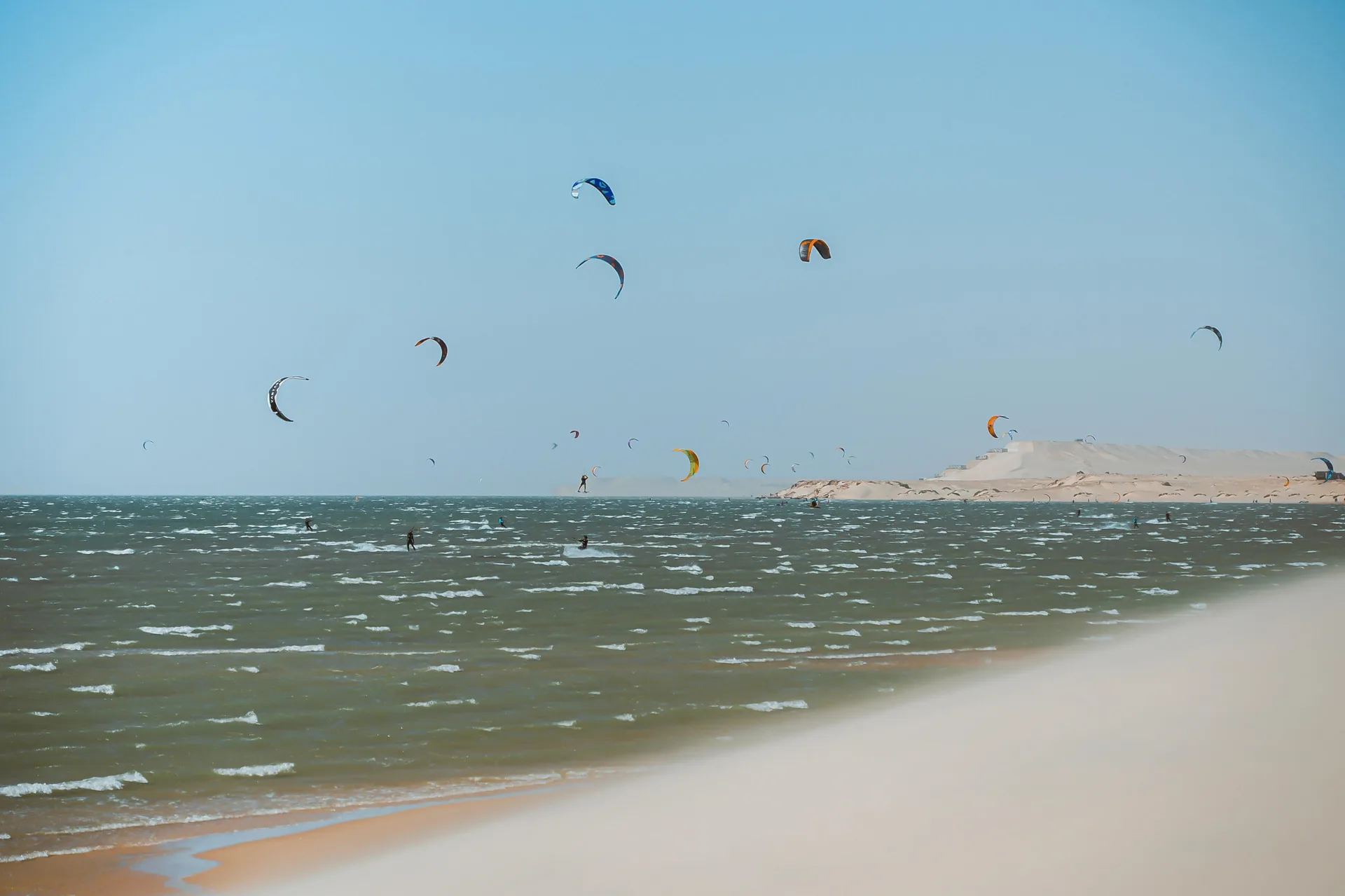
The Point marks the geographic collision between two very different bodies of water. On one side, the calm, shallow lagoon that Dakhla is famous for. On the other, the open Atlantic with its relentless swells and deep-water currents. Where these two worlds meet, the water becomes a churning, unpredictable playground that has humbled many experienced riders. Strong tidal currents sweep through the gap, creating standing waves, boils, and eddies that shift minute to minute. The wind funnels and accelerates around the headland, producing gusts that can catch even seasoned kiters off guard. The Point is not a spot — it is a challenge, and it rewards only those who approach it with skill, preparation, and a healthy dose of respect.
Conditions & Best Time
The Point shows its true character from October through March when Atlantic swells combine with the area's tidal dynamics. The water state ranges from confused chop on smaller days to proper breaking waves when the swell runs. Unlike the clean, organized waves at Pointe d'Or, the conditions at The Point are inherently messy — you deal with cross-swells, reflected waves bouncing off the rocky shore, and surface currents that pull in multiple directions simultaneously.
Wind here is variable and gusty. The prevailing trade winds accelerate around the headland, and you can experience 10-knot differences in wind speed within a few hundred meters. Gusts arrive without warning, and lulls can be equally sudden. Water temperature ranges from 18 to 21 degrees Celsius during the season. Mid to high tide offers the best conditions — at low tide, exposed rocks make the launch area hazardous, and the currents become dangerously strong in the shallower channels. The bottom is a patchwork of sand and rock, so booties are strongly recommended.
- Wind: Variable trade winds with strong gusts, 10+ knot variation
- Water: Confused chop to breaking waves, strong currents
- Bottom: Sand and rock (booties recommended)
- Best tide: Mid to high tide
- Best months: October to March
- Water temperature: 18–21°C
Who Should Ride Here?
The Point is strictly for expert-level riders. You need mastery of kite control in gusty, shifting conditions, and you must be comfortable riding in currents strong enough to pull you off course even with a kite in the air. Wave-riding ability is essential on bigger days, but even on calmer days the confused chop demands excellent board skills and the ability to ride powered up and powered down within the same tack.
What makes The Point particularly demanding is the combination of hazards. At other expert spots, you might face big waves or strong current or gusty wind — here, you face all three simultaneously. Your self-rescue skills need to be well-practiced, and you should be confident swimming in current. Riders who thrive at The Point are typically those who have logged hundreds of hours in varied ocean conditions and genuinely enjoy the mental challenge of reading chaotic water. If you prefer clean, predictable setups, this is not your spot.
How to Get There
The Point is roughly 12 kilometers north of Dakhla town, accessible by a combination of paved and unpaved roads. A 4x4 is required for the final approach, which crosses sandy desert terrain with no marked track. The drive takes about 25 minutes from town. There is no designated parking area — riders typically park on firm ground away from the sand and walk their gear down to the launch point. Like Pointe d'Or, there are no facilities at the spot, so bring all supplies including drinking water, sun protection, and a first aid kit.
Our Coaching at The Point
Amine reserves The Point for advanced coaching sessions focused on riding in challenging, real-world conditions. The sessions here are not about learning new tricks — they are about deepening your ability to read and respond to constantly changing water and wind. Amine coaches riders on interpreting current patterns, identifying safe zones within the turbulence, and making split-second decisions about kite position when a gust or lull arrives unexpectedly.
Emergency procedures are a central part of every session at The Point. Before entering the water, Amine runs through the specific hazards of the day: where the current is strongest, which rocks are exposed at the current tide state, and what to do if you get pulled toward the channel. He establishes visual markers on shore so riders can monitor their drift. Radio helmets allow real-time coaching adjustments while you ride. These sessions build the kind of deep situational awareness that separates competent riders from truly confident watermen and waterwomen.
Photo Gallery
Ready to Ride The Point?
Think you have what it takes? Get in touch with Amine to discuss your experience level and plan an advanced session at one of Dakhla's most demanding spots.
Book Your Session →