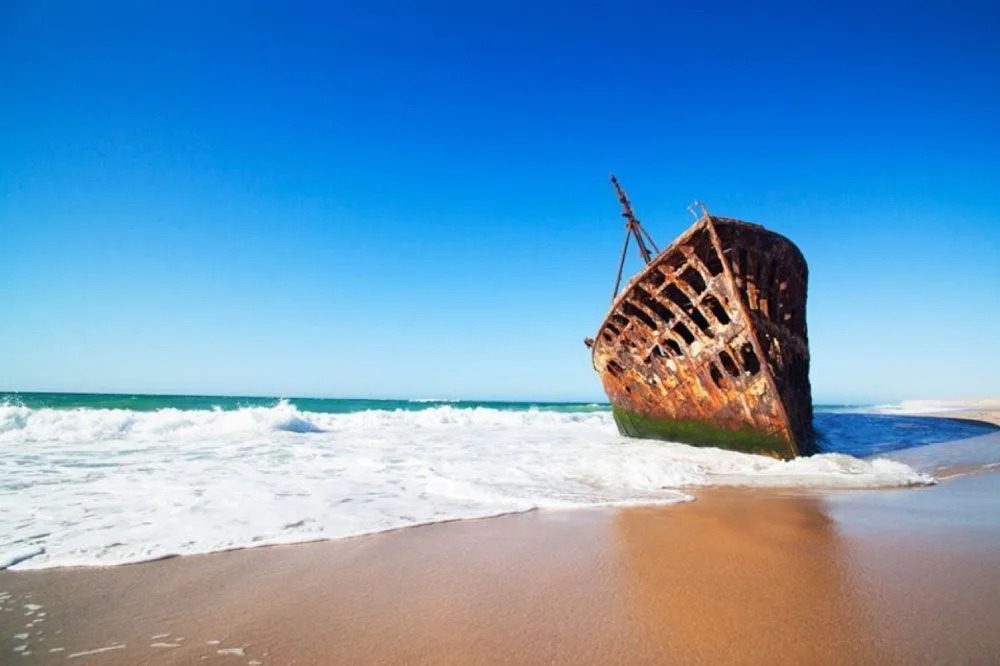
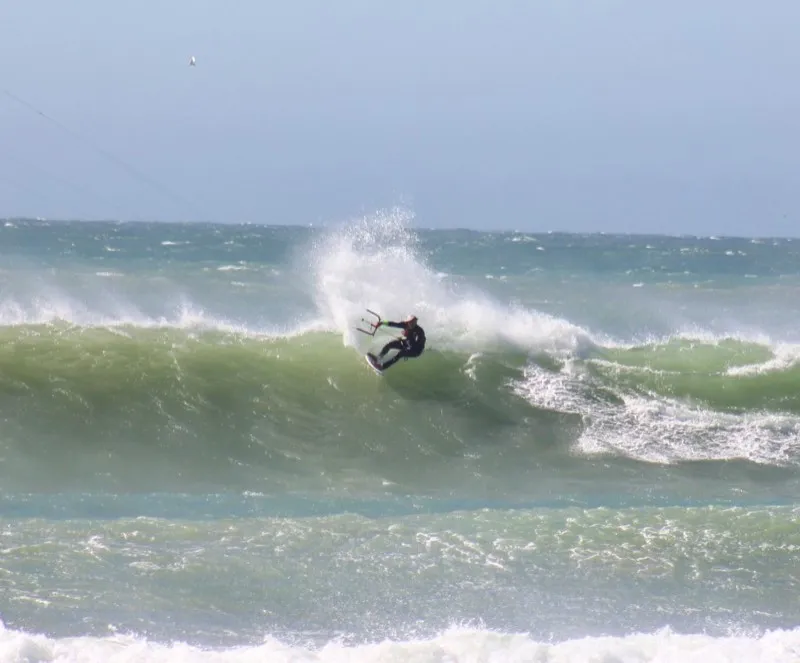
Pointe d'Or occupies the northernmost point of the Dakhla peninsula, where the Saharan coastline collides head-on with the full force of the Atlantic Ocean. There is no lagoon here, no sheltered bay, no gentle introduction. This is open ocean, raw and unfiltered. Heavy swells roll in from the northwest, breaking over a mix of rock and sand reef, producing walls of whitewater that demand respect. The wind blows cross-offshore, which means your kite pulls you away from shore and into deeper, more powerful water. Pointe d'Or is not a spot you stumble upon — you seek it out deliberately, and only when you have the skills and experience to handle what it throws at you.
Conditions & Best Time
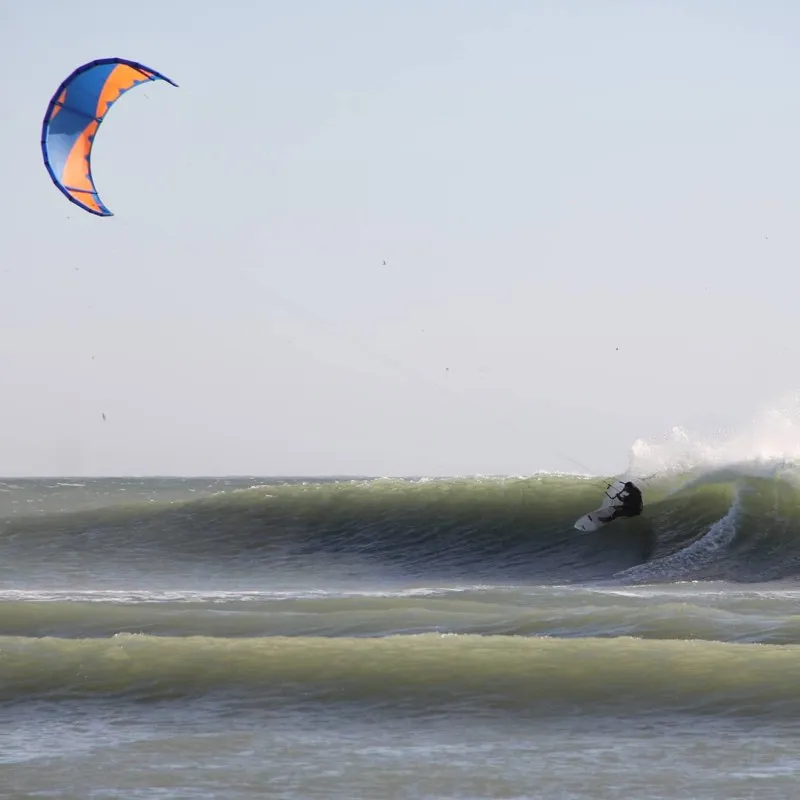
Pointe d'Or comes alive during the winter swell season from October through March, when North Atlantic storm systems send long-period groundswells rolling down the Moroccan coast. Wave faces regularly reach overhead height, and on the biggest days the sets stack up well beyond double overhead. The bottom is a mix of rock shelves and sand patches, creating unpredictable breaking patterns that shift with the tide and swell direction.
The wind here is cross-offshore, typically blowing from the east or southeast. This orientation is excellent for wave riding — it holds the wave faces open and allows clean, unbroken lips — but it also means that any problem with your kite or equipment pushes you further out to sea rather than back to shore. Water temperature sits between 18 and 20 degrees Celsius in winter, and a full 4/3 wetsuit is recommended. The best sessions happen around mid-tide when the reef shapes the waves most cleanly. Low tide exposes too much rock, and high tide drowns the features that give the waves their shape.
- Wind: Cross-offshore, east or southeast
- Water: Heavy ocean waves, overhead to double overhead
- Bottom: Rock shelves and sand
- Best tide: Mid tide
- Best months: October to March
- Water temperature: 18–20°C
Who Should Ride Here?
Pointe d'Or is exclusively for expert riders with significant wave-riding experience. This is not the place to learn how to ride waves, practice your first bottom turn, or experiment with strapless gear for the first time. You need to be comfortable handling your kite in strong, gusty conditions while simultaneously reading large ocean swells. Self-rescue skills are non-negotiable — if something goes wrong here, you need to be able to get yourself back to shore without assistance.
The ideal rider for Pointe d'Or is someone who has already spent years riding waves at other locations and is looking for a step up in power and consequence. Strapless wave riding is the primary discipline here, though some riders use twin-tips in lighter swell conditions. If you have experience at spots like Cape Verde, Mauritius, or the heavy reef breaks of the Canary Islands, you will feel at home at Pointe d'Or.
How to Get There
Pointe d'Or lies approximately 15 kilometers north of Dakhla town, but do not let the short distance fool you. The final stretch of road is an unpaved desert track that requires a 4x4 vehicle. Attempting the drive in a standard rental car will end badly — soft sand sections and rocky washouts make this route impassable without proper clearance and traction. Allow at least 30 to 40 minutes for the drive. There are no facilities, no shops, and no rescue services at the spot. Bring everything you need: water, food, a spare tire, and a fully charged phone with GPS coordinates saved.
Our Coaching at Pointe d'Or
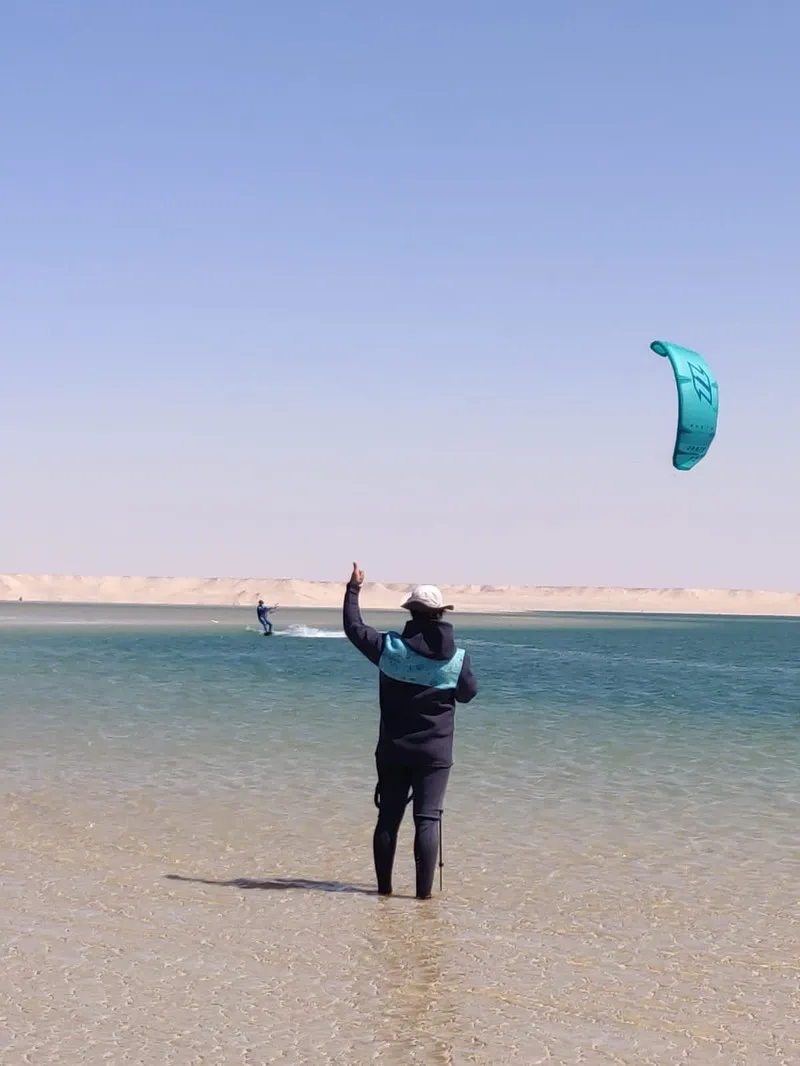
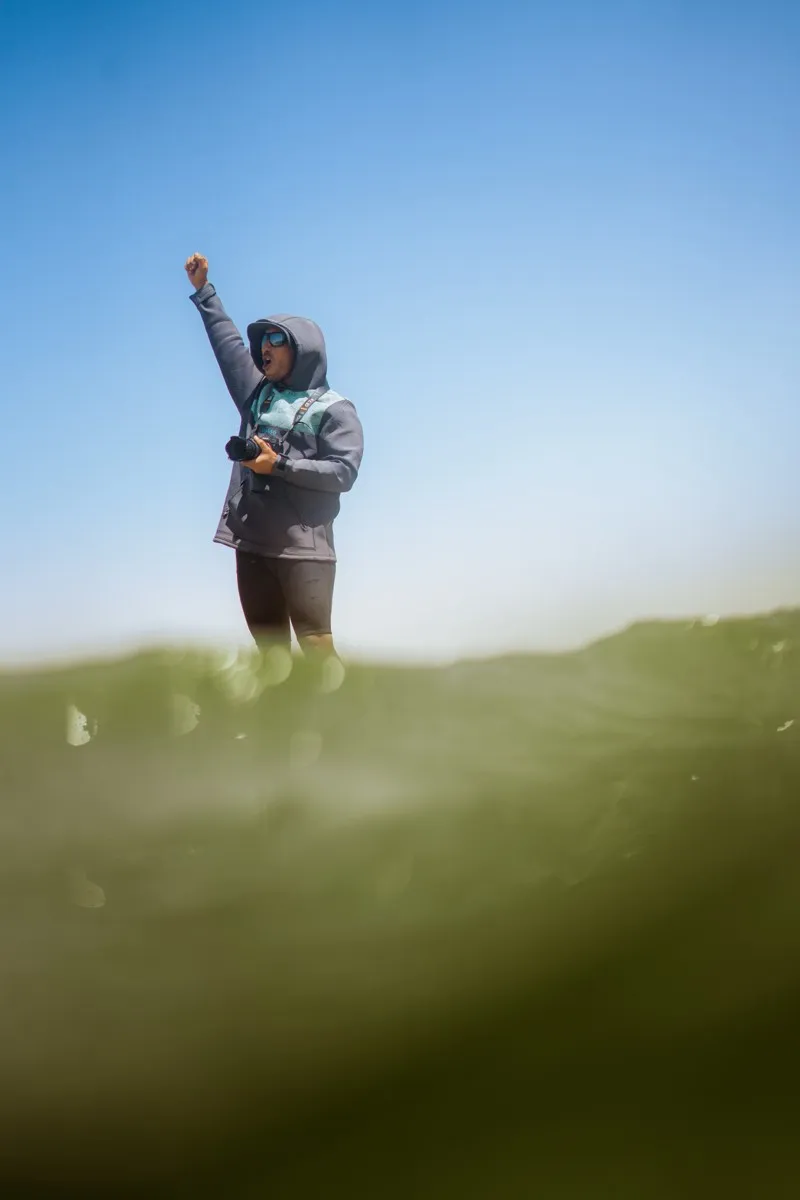
Amine brings only the most experienced riders to Pointe d'Or, and only when conditions align. A session here is not a standard coaching day — it is an expedition. Before heading out, Amine reviews the swell forecast, wind data, and tide charts to ensure the window is safe and productive. On the water, the focus shifts to advanced wave-reading techniques: understanding how the swell wraps around the point, identifying the safest channels for getting out past the break, and timing your wave selection to avoid cleanup sets.
Heavy water skills are the priority at Pointe d'Or. Amine coaches riders on maintaining kite control during wipeouts, recovering boards in impact zones, and managing the psychological pressure of riding in consequential surf. Every session includes a detailed safety briefing, agreed-upon hand signals, and a clear plan for what to do if conditions deteriorate. This is coaching for riders who want to push their absolute limits in one of the most powerful wave spots in the Dakhla region.
Photo Gallery
Ready to Ride Pointe d'Or?
If you have the wave-riding experience and want to test yourself against some of the most powerful conditions in Dakhla, get in touch. Amine will assess your level and plan the right session for the right day.
Book Your Session →